"The Rig Doesn't Make the Nomad, but It Changes Everything"
On the relationship between your vehicle, your identity, and why both matter more than you expect
Everyone wants to know what you drive.
It's almost always one of the first questions. Mentioned in the first sixty seconds, alongside where you're from and how long you've been on the road.
What are you in?
And honestly, I get it. The rig is the most visible part of this life. It's the house, the vehicle, the base camp, and the statement — all at once. It tells people something about how you're doing this.
But after nearly a decade, I've come to understand something more layered about the relationship between a nomad and their rig.
It matters enormously. And it matters far less than people think.
What the rig actually is
Your rig is not just transportation. That's the piece most people outside this world miss.
It's your bedroom and your kitchen. It's where you process grief and celebrate good days. It's the place you retreat to when the world is too much, and the place you launch from when you're ready to engage with it again.
It fails you at the worst possible moments. It surprises you with its resilience at others. You learn its sounds the way you learn a person's moods — which rattle matters and which ones don't, which warning light can wait and which one can't.
You develop a relationship with it. That's not romanticizing. That's just the reality of living inside something every day.
The hierarchy nobody talks about
There's a quiet hierarchy in nomadic communities around rigs. It's usually unspoken, and most people would deny it exists.
But it's there.
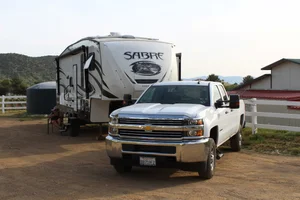
The massive Class A diesel pusher that costs more than most houses. The perfectly converted Sprinter van with the custom cabinetry and the matching color palette. The vintage Airstream, meticulously restored, that draws stares at every campground.
And then there's the rest of us. The people in older rigs with more miles than glamour. The truck campers. The cargo van conversions that look rough from the outside but work exactly as intended. The people who are out here in what they could afford, making it work.
Here's what I've learned: the people in the nicest rigs are not, on average, having a better time.
I've met people in $300,000 motorhomes who were miserable. I've met people in $4,000 cargo vans who were the most genuinely content human beings I've ever encountered.
The rig sets the constraints. The nomad fills them.
What changes depending on what you're in
That said — and this matters — the type of rig you live in genuinely shapes your experience in ways that aren't trivial.
Van life compresses everything. You learn efficiency at a cellular level. You can disappear into places a larger rig can't reach. You develop an instinct for stealth and self-sufficiency that sharpens something in you. The tradeoff is space, comfort, and the reality that bad weather in a van is a different experience than bad weather in a 40-foot motorhome.
RV life — whether towable or motorized — gives you room. Room for routines. Room for another person without negotiating every cubic foot. Room for gear, for hobbies, for a real kitchen. The tradeoff is maneuverability and access. Some of the best places I've ever parked were places a larger rig couldn't go.
Skoolie life is in its own category entirely. You build it, which means you own every decision in it. The pride of living in something you created with your own hands is real and significant. The tradeoff is mechanical complexity and the reality that most skoolies require an ongoing relationship with repair.
None of these is better. All of them are true.
The rig you can afford is the right rig
This is the most important thing I can tell anyone at the beginning of this journey.
The nomadic community can sometimes make it feel like you need to optimize your setup before you start. The right solar array. The right inverter. The right lithium battery bank. The right water filtration system.
And yes, those things matter once you're out here.
But the rig you can afford, that runs, and that you're living in? That beats the perfect rig you're still saving for by every meaningful measure.
You will learn more in your first sixty days on the road in an imperfect vehicle than in six months of research and planning. The road teaches you what you actually need. And almost always, it's less than you thought.
The real relationship
Here's the truth about what the rig does for you, beyond transportation and shelter.
It gives you a frame. A container for this life.
And within that container, you build everything that actually matters — your routines, your perspective, your patience, your sense of wonder, your tolerance for discomfort, your capacity for gratitude.
The rig doesn't make the nomad.
But the way you live inside it, the care you give it, and the miles you're willing to travel in it — those things do.
See you on the road. 🛣️