The Three Roads: An Introduction to How Nomadic People Live
We’ve spent the last six weeks building something together here at Nomadic By Nature. We started with a word nomás, that ancient Greek shepherd and his purposeful flock. We moved through the why, the what it does to you, the mindset, the community, the meaning of home, and now we’re here. At the practical question underneath all of it. How do people actually live this way?
The answer, in the modern nomadic world, tends to come in three forms. There are three distinct roads. There are three communities with their own cultures, their own rhythms, and their own reasons for being.
Let me introduce them to you. The first one is the most common that the average human has heard of.
The RV Life
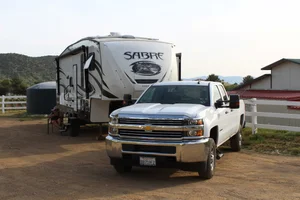
The fulltime RV world is the largest and most established of the three communities, and the most diverse. Young families and retirees, weekend warriors turned fulltime travelers. There are also people who live in $400,000 motorhomes and people in who live in $8,000 travel trailers they fixed up themselves.
What unites them is the choice to make a rolling home on wheels their primary residence. The RV world has infrastructure being what it is has campgrounds, those campgrounds host rallies, and communities that live in those campgrounds, are a whole ecosystem built around supporting people who live and travel this way.
These communities tend to attract people who want space and amenities alongside the freedom. A real bed, a kitchen that actually cooks, room to breathe. The tradeoff is size — an RV is harder to park in the wild, more dependent on hookups and established campground infrastructure
But for a lot of people, that’s not a tradeoff at all. That’s the point.
Lets talk about Van Life since Vanlife is the youngest of the three communities and arguably the one that’s captured the widest cultural imagination in the last decade.
There’s is a reason for that, there’s something about a converted van, i don’t know if you remember the converted vans of the early 70’s. Van’s are compact, self-sufficient, able to park almost anywhere, and that represents a particular kind of freedom. They give you the ability to disappear into the mountains on a Tuesday, and wake up in a different landscape every morning if you want to. They also allow you to move through the world quietly and lightly.
The van community tends to skew toward solo travelers and couples, though families do it too. I remember seeing family’s traveling in VW bus’s, hell my family did as well. Van’s attract people who prioritize mobility over space, they help those who’ve developed a specific skill for living intentionally within tight boundaries.
Van Life is a creative, resourceful, fiercely independent culture, and the builds, and the ways people transform a cargo van into a home are genuinely, a form of art all to itself. Vanlifer’s take great pride in the style and amenities they choose to built into their spaces.
On the other side is Skoolie living the conversion of retired school buses, tour buses and city buses into rolling homes. Skoolies just might be the most underestimated community of the three, and by far they are the most interesting.
A converted school bus gives you something the other two don’t in quite the same way, they give you vast room to build. The blank canvas of a bus is enormous, and the community that’s developed around Skoolie living is so diverse and is full of builders, makers, creative thinkers who relish the process of turning something industrial into something warm and livable.
Skoolie culture is characterized by a particular kind of resourcefulness and community spirit. Those that choose skoolie life are people who figured out how to do things themselves, and they love showing others not their skoolie homes, but love to show and help other the same.
The tradeoff in building a skoolie over a van or even buying an RV is the build itself. A Skoolie takes time, money, skill, and a real tolerance for the process of getting from raw bus to finished home, but for those who love that process, it’s not a tradeoff. It’s the whole point
So here we are, after discussing the three major forms of nomadic homes, and they are not the only ones. We didn’t even mention the car dwellers, the amazing ambulance builds and far off overlander community which is a whole world unto itself.
So with that said here’s what I want you to hold onto as we close out this first series:
Whether someone is in a motorhome, a converted van, a school bus, a car, an ambulance or whatever they built out for themselves, they’re all answering the same call. The one that’s been in us since that Greek shepherd walked his flock across open land.
Move toward what sustains you, and never let staying cost more than going.
This is just the beginning. Each of these three roads deserves its own deep exploration, and that’s exactly what’s coming next at Nomadic By Nature. We’re going to spend real time inside each of these communities, talking about the real life that doesn’t always make it onto the highlight reel.
Thank you for being here for my first series of posts, and thank you for reading, for commenting, for sharing, for showing up.
So from here the road goes on,
and I’m so glad we’re on it together.
See you out there. 🛣️