The Road Does Not Fix You
A common narrative portrays nomadic life as the ultimate escape. Leave your job, sell your house, pack your belongings, and head toward the horizon. Somewhere between the life you left behind and the first breathtaking sunset, you will supposedly become a new person.
Nomadic by Nature is a reader-supported publication. To receive new posts and support my work, consider becoming a free or paid subscriber.
It is an appealing idea, and it is one I likely entertained myself.
When I began living on the road full-time in 2017, I was searching for change. I wanted freedom, space, and a life guided by intention rather than routines I had simply inherited.
In many ways, the road delivered, but what it did not do was fix me.
Nine years later, that realization stands out as one of the most profound lessons I have learned. You can change your address, your scenery, and almost every visible aspect of your life. However, no matter where you go, you always bring yourself along.
The beginning of any significant life change can be exhilarating.
Everything feels fresh. The mornings look different. Your schedule changes. The faces around you are unfamiliar, and the routines that once defined your days suddenly disappear.
For a while, that sense of novelty can feel like genuine transformation. However, novelty and healing are not the same thing.
The road can become just as effective a distraction from your problems as a conventional life. There is always another destination to research, another campsite to find, another repair to make, or another sunset to photograph. It is easy to remain incredibly busy while convincing yourself that you are becoming free.
Eventually, though, things become quiet.
In that quiet, whatever you have not addressed usually finds its way back to the surface.
The road did not erase my fears. It did not automatically break old habits or answer every question I had about my identity, my purpose, or the person I wanted to become.
What it did was reduce the number of places where I could hide from those questions.
That proved to be far more valuable than being fixed.
One of the greatest gifts this lifestyle has given me is space.
Not only physical space, but mental and emotional space as well.
It is the kind of space that appears when the noise of a conventional life begins to fade, leaving enough silence for you to truly hear yourself think.
However, silence can be unsettling.
When you are no longer rushing from one obligation to the next, you begin to notice things. You recognize what you have been avoiding. You begin to see which relationships were built on convenience rather than genuine connection. You notice the roles you played simply to meet the expectations of others.
You also begin to recognize the difference between what you claim to value and how you actually spend your time.
The road does not tell you what to do with those realizations. That responsibility still belongs to you.
Freedom can create the environment for change, but you must decide what happens within that space.
I have awakened in places I once considered unimaginable.
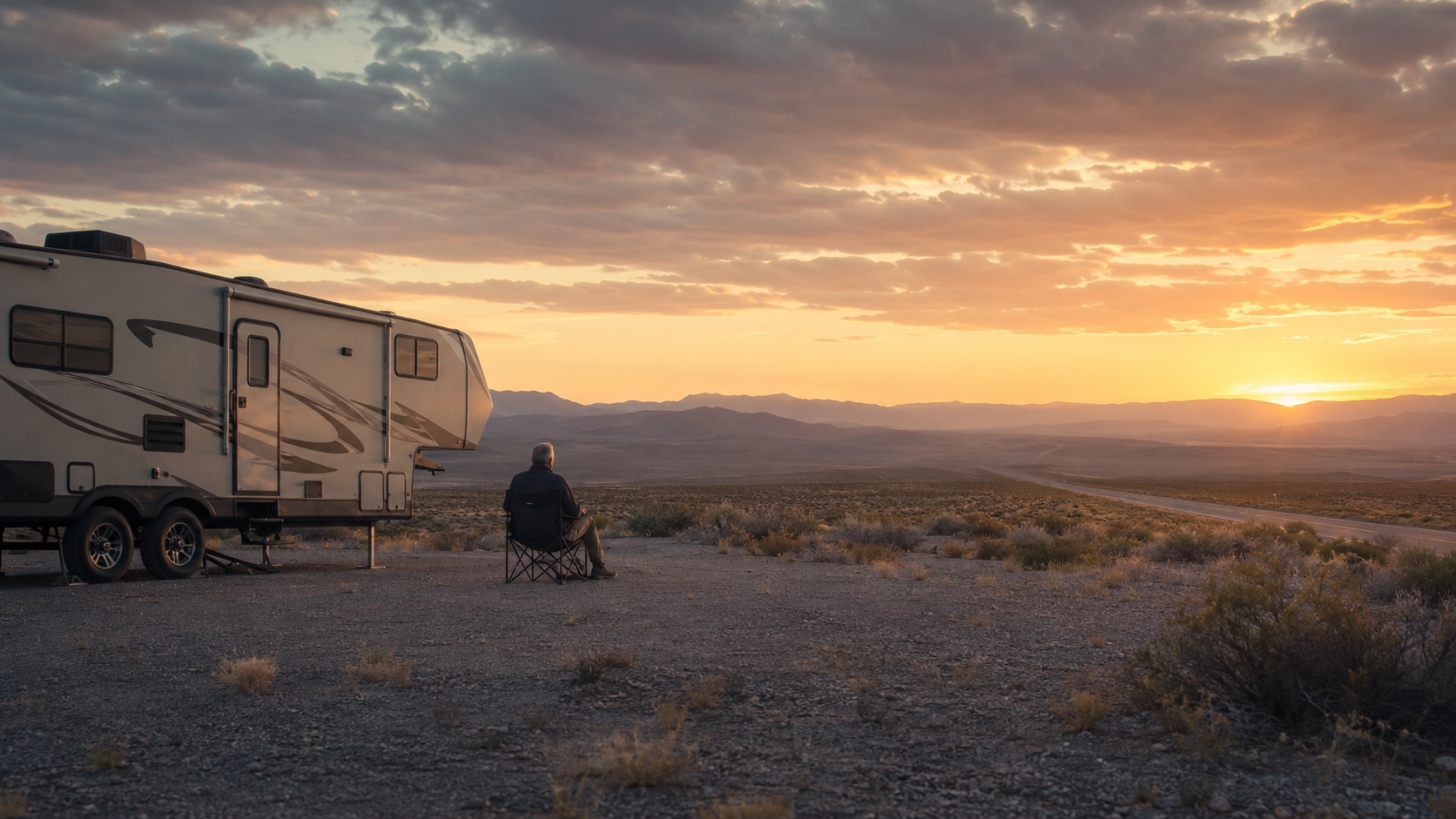
I have looked out across desert landscapes that stretched farther than I could see. I have opened my door to mountains standing just beyond my campsite. I have traveled empty roads that seemed to invite me toward destinations I had never known existed.
Those moments are precious to me.
However, a beautiful landscape does not automatically create a beautiful life.
You can sit beside the Grand Canyon and still feel lost. You can watch the sun disappear behind a desert mountain and still carry grief. You can park beside the ocean and still wonder what comes next.
There is sometimes an expectation that freedom should bring permanent happiness.
It does not.
What freedom can do is make your life more honest.
When enough distractions are removed, you eventually have to confront the person standing at the center of everything.
You.
That is where the real journey begins.
The road presented me with opportunities, and I had to decide what to do with them.
It gave me solitude, and I had to learn the difference between solitude and isolation.
It brought uncertainty, and I had to learn to trust myself when there were no guarantees about what would happen next.
It presented problems, and I had to become better at solving them.
It offered freedom, and I had to learn how to maintain it.
That is something I understand far more clearly today.
Freedom is not a passive experience.
You do not simply step into a different life and become a different person. You must actively participate in your own growth.
You have to question old beliefs. You have to recognize patterns that no longer serve you. You have to make peace with decisions you cannot change. You have to stop expecting geography to solve emotional problems.
Sometimes, you must also admit that the thing you were trying to escape was never entirely outside of you.
That realization can be uncomfortable, but it can also be profoundly liberating.
Once you understand that the road is not going to fix you, you can stop waiting for it to do something it was never intended to do.
After nine years, I see the road less as a cure and more as a mirror.
It reflects things back to you.
It reveals your patience when something breaks. It exposes your fear when your plans fall apart. It tests your confidence when there is no one else nearby to guide your decisions.
It reveals your relationship with money when resources become limited, your ability to be alone when the campsite becomes quiet, and your gratitude when something simple goes right.
The road reveals you.
Sometimes you will like what you see.
Sometimes you will not.
However, seeing yourself clearly is the foundation for meaningful change.
Perhaps that is one of the reasons I am still here after all these years.
I did not find a perfect version of myself waiting somewhere down the highway.
Instead, I found opportunities to understand myself better. I found room to become more honest. I found permission to change my mind. I found evidence that I could handle more than I thought possible.
I also learned that growth is not a destination you eventually reach.
It is a practice.
Just like freedom.
The road does not fix you.
It never promised to.
It will not erase your past, heal every wound, remove every fear, or transform you simply because you crossed another state line.
What it can offer is something incredibly valuable.
Space to think, to question, to listen, and space to discover which parts of your life were truly yours and which parts you were carrying simply because you had never stopped long enough to put them down.
What happens next is entirely up to you.
Nine years ago, I believed I was leaving one life behind and moving toward another.
Today, I understand that the journey was never only about where I was going. It was also about becoming willing to finally meet the person who had been traveling with me the entire time.
The road did not fix me, but it gave me enough room to finally begin doing the work myself.